How E-Waste Collection Works (Step-by-Step)
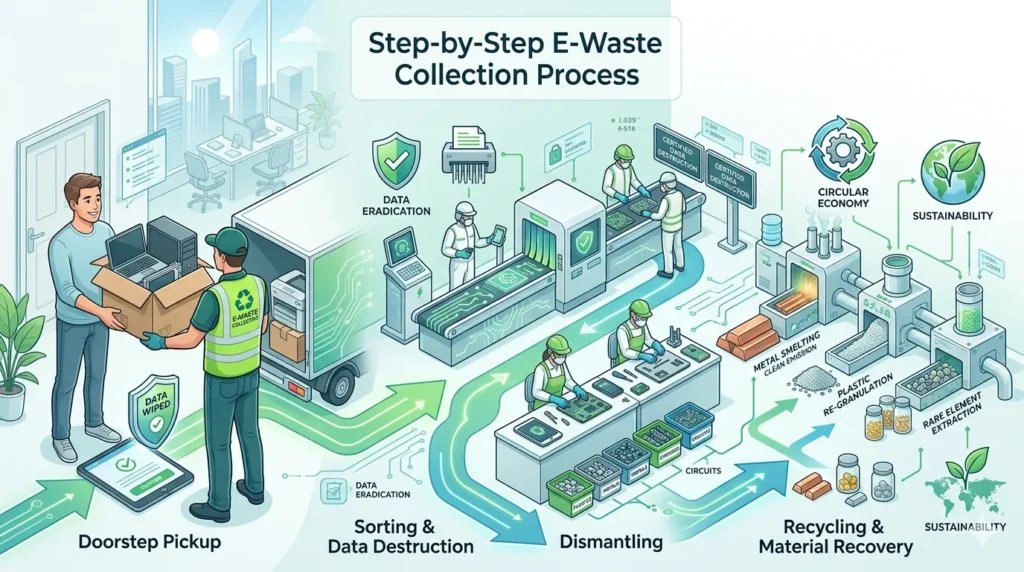
A complete guide to managing technology waste responsibly E-waste collection works through a structured process: Schedule pickup Assess and document items Doorstep collection Secure data destruction Transportation to authorized facility Sorting and segregation Dismantling and material recovery Responsible disposal This process ensures safe e waste disposal, protects data, and supports an efficient waste management system. Introduction: Why Technology Waste Needs Attention In today’s fast-paced digital world, devices become obsolete faster than ever. Smartphones, laptops, servers, and appliances quickly turn into technology waste—also known as e-waste. However, this isn’t just ordinary trash. E-waste contains: Valuable materials like copper, aluminum, and gold Hazardous substances like lead and mercury If handled incorrectly, it harms both the environment and human health. That’s why structured e waste disposal and professional collection systems are essential. Moreover, with increasing awareness and regulations in India, using organized services for disposal e waste is no longer optional—it’s responsible. What is E-Waste Collection? E-waste collection is the organized process of gathering discarded electronic items and routing them for recycling or safe disposal. E-waste collection is the systematic pickup, transport, and processing of discarded electronics to ensure safe recycling, material recovery, and environmental protection. Instead of storing or dumping old devices, users can rely on professional systems that simplify computer scrap handling and ensure compliance. Step-by-Step Process of E-Waste Collection Scheduling the Pickup The process begins with booking a pickup. Users provide: Type of items (laptops, servers, etc.) Quantity Location This helps optimize logistics within the waste management system. For businesses, bulk pickup scheduling is often available. Assessment and Documentation Before collection, items are evaluated. This includes: Identifying device types Estimating volume Creating compliance records Assessment ensures transparency, regulatory compliance, and efficient recycling planning. This step is especially critical for corporate e waste disposal. Doorstep Collection Trained professionals collect items directly from your location. Benefits include: No transportation hassle Safe handling of bulky equipment Reduced environmental risk Additionally, dismantling support may be included for offices. Secure Data Destruction One of the most critical steps. Devices often contain sensitive data. Professional services ensure: Permanent data wiping Physical destruction (if required) Secure data destruction ensures zero data recovery and protects businesses from breaches. This step is non-negotiable for IT assets and computer scrap. Transportation to Recycling Facility Collected e-waste is transported to authorized facilities. Strict protocols ensure: Safe packaging Hazard-free transit Regulatory compliance Sorting and Segregation At the facility, waste is categorized into: Reusable devices Recyclable materials Hazardous components This improves efficiency and supports a circular economy. Dismantling and Material Recovery Devices are broken down into components. Recovered materials include: Metals (gold, copper, aluminum) Plastics Glass Material recovery extracts reusable resources from e-waste, reducing the need for new raw materials. This is where technology waste becomes valuable again. Responsible Disposal Remaining hazardous materials are disposed of safely. This ensures: Zero environmental contamination Compliance with regulations Sustainable waste management E-Waste Collection vs Informal Disposal Factor Professional E-Waste Collection Informal Disposal Environmental Safety High Very Low Data Security Secure destruction No protection Compliance Fully compliant Illegal/unregulated Resource Recovery Maximum Minimal Convenience Doorstep pickup Manual effort Clearly, choosing a structured waste management system makes a significant difference. Benefits of Professional E-Waste Collection Using organized e waste disposal services offers multiple advantages: Eco-friendly handling of technology waste Recovery of valuable materials Safe handling of hazardous components Secure data destruction Compliance with government regulations Convenient doorstep collection For businesses, it also enhances ESG and sustainability credentials. Why Professional Services Matter Many people still rely on informal methods like dumping or burning computer scrap. However, this leads to: Toxic emissions Soil and water contamination Health hazards Professional systems ensure: Safe recycling Legal compliance Environmental protection Future of E-Waste Collection in India India is one of the fastest-growing generators of technology waste. Key trends include: Stronger regulations Increased corporate responsibility Advanced recycling technologies Growth in organized waste management systems As awareness grows, structured disposal e waste solutions will become the norm. Frequently Asked Questions (FAQs) 1. What is the safest way to dispose of e-waste? The safest way is to use certified e waste disposal services that ensure recycling, data destruction, and compliance. 2. Can I schedule a pickup for small quantities? Yes, many providers allow pickups for both small and bulk technology waste. 3. What happens to my data after disposal? Professional services permanently erase or destroy data to prevent recovery. 4. Is e-waste recycling mandatory in India? Yes, businesses must comply with e-waste management regulations under government rules. 5. What items are considered computer scrap? Items include: Old laptops and desktops Servers Printers Hard drives Final Thoughts Managing technology waste is no longer just about disposal—it’s about responsibility. A structured waste management system ensures: Environmental safety Resource recovery Data protection By understanding how e-waste collection works, individuals and businesses can make smarter, sustainable decisions.